Table of Contents
How Smart Buildings Are Changing the Way We Work
The way we work is going through big changes, largely thanks to smart buildings. These aren’t just regular buildings-they use technology to respond to people and the world around them.
Smart buildings make our workplaces more comfortable, help us get more done, and use less energy. Technology is turning our once basic offices into places that actively take care of us. Even building upkeep is changing, as advanced roof recovery services are now a key part of keeping these buildings in top shape for the future.
As of August 25, 2025, smart buildings aren’t just a new trend-they’re shaping how modern offices are designed. They make our workspaces easier to use, more efficient, and better places to spend our time. This article explains how smart buildings work and how they’re changing our daily work lives.
What Are Smart Buildings and How Do They Work?
What makes a building “smart”
A smart building uses technology to control resources more wisely and create a better experience for people inside. Unlike older buildings, smart buildings don’t just have technology-they actually use it to interact with people and adjust automatically.
Collecting and using data helps in making quick improvements based on what’s happening inside and outside the building.
Not all tech-focused buildings are truly smart. “Connected” buildings link up different systems, but smart buildings take things further. They focus on making everything run better and making sure people have a great experience, paying attention to things like comfort, efficiency, and productivity-sometimes all at once.
Main technologies inside smart buildings
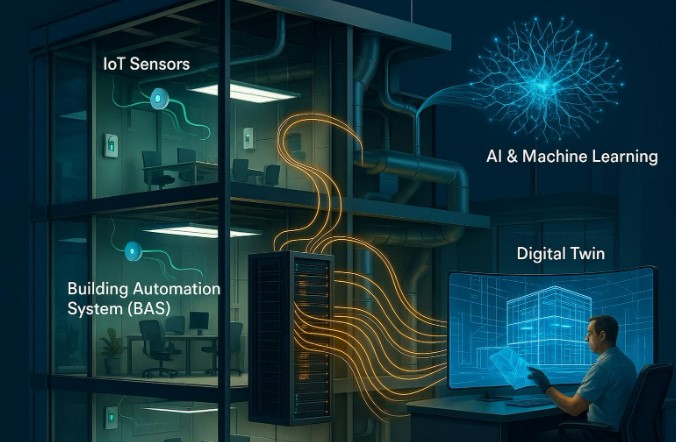
Several important technologies work together in smart buildings:
- Internet of Things (IoT): Connects various sensors through the building, tracking things like temperature, air quality, light, and how many people are present.
- Building Automation System (BAS): Brings together systems for air, light, security, and more, so they can be managed from a phone or central computer.
- Artificial Intelligence (AI) and Machine Learning (ML): Helps the building “learn” from past data and adjust over time to make things work better for everyone.
- Digital twins: These are digital copies of the building, regularly updated with sensor data, so managers can see exactly what’s going on inside and control things more easily.
How Smart Buildings Change the Workplace
Better comfort and personal control
These buildings focus on making people feel comfortable. They let you control things like temperature and lighting, often without even pushing a button. Sensors adjust the settings based on who’s there and people’s preferences, so everyone can have a workspace that suits them, making workdays healthier and more pleasant.
For example, when someone walks into an office, lights and temperatures can automatically adjust to their favorite settings, which keeps people comfortable and happy throughout the day.
Cleaner air and improved well-being
Smart buildings keep an eye on indoor air quality. They pump in fresh air as needed, monitoring how many people are in the building and adjusting automatically. This way, the air stays clean, and people get sick less often. This is especially important since many people around the world still breathe poor quality air at work.
Smart lighting and climate controls
Intelligent lighting and heating systems make sure energy isn’t wasted. Motion sensors know when people are in a room and adjust lights or temperature levels. If a space is empty, energy is saved. If lots of sunlight is coming through the window, indoor lights will dim. This keeps utility bills low, and everyone stays comfortable.
Reducing stress and distractions
These buildings help people stay focused by cutting down on typical workplace issues like searching for meeting rooms or quiet spaces. Employees can see in real-time where spaces are available, saving time every day. Smart systems even help people plan their day based on when they work best, lowering stress and helping everyone get more done.
Productivity and Teamwork in Smart Workspaces
Managing meeting rooms and space better
Smart technology helps companies use every part of the office well. Live data shows when meeting rooms are busy, which areas are filled, and which ones are empty. This means employees can easily find a spot, and companies can make decisions about office layouts or move to smaller spaces if needed.
Making the best use of space
With sensors counting how many people are in the building and where they are, workplaces can be organized based on real needs. Empty spaces don’t get heated or lit unnecessarily, and the office layout can change as people’s needs shift, helping companies save money and energy.
Using real-time data to make choices
Sensors collect nonstop information for building managers and workers. This data shows trends in energy use, room preferences, and how spaces are used. Employees can check, for instance, when the cafeteria is least busy, while companies can find ways to improve the workplace using actual information rather than guesses.
Supporting flexible work styles
Smart buildings support flexible work by tracking which spaces are used and when. This encourages more varied schedules, with employees free to work in ways that suit them best. Automated building systems adjust as needed, making the workplace more supportive for everyone, whether working in-person or remotely.
Security and Safety Improvements with Smart Technology
Smart security and visitor management
Security gets better in smart buildings. Access cards or digital entry systems combine with people counters to track who comes and goes, quickly flagging any issues. Systems like biometric locks further limit access, making sure only authorized people get in.
Upgraded surveillance and emergency response
Smart buildings use cameras and sensors to monitor safety. If there’s an emergency-like smoke or a break-in-the system can alert staff right away, trigger alarms, unlock or lock doors, and even guide people to safety using lights. By connecting all these features, buildings become much safer for everyone inside.
Saving Energy and Supporting the Environment
Automated energy management
One of the biggest benefits of smart buildings is cutting down on wasted energy. By using sensors and automation, lights, heating, and cooling only run when needed. Spaces that aren’t being used are powered down, which saves money and benefits the environment. The U.S. Department of Energy says smart buildings can use 30-50% less energy than traditional buildings.
With ongoing monitoring, buildings can spot equipment issues before they turn into big problems. This means repairs happen at the right time, systems last longer, and fewer emergency repairs are needed. Maintenance teams know exactly where to focus their efforts, saving time and resources.

Helping meet sustainability goals
Buildings account for a huge share of the world’s carbon emissions. By using less energy and switching to renewables like solar, smart buildings cut carbon pollution. They can track their progress in real time, making it easier to meet environmental goals and show results to regulators and the public.
Real-World Examples of Smart Buildings
| Building | Location | Key Features |
| The Edge | Amsterdam | Highest BREEAM sustainability rating; smart app personalizes each work area based on employee schedules and preferences. |
| Burj Khalifa | Dubai | Advanced controls for air and comfort; real-time monitoring reduces maintenance needs and increases system availability. |
| Frasers Tower | Singapore | Digital twin for forecasting; integrates with Microsoft tools; sensors manage lighting, air, and comfort in real time. |
Challenges When Adopting Smart Buildings
Fitting into existing buildings
Installing smart systems in older buildings can be tricky and costly. Old infrastructure isn’t always compatible with new technology, so careful planning and skilled workers are needed to connect everything and avoid complicated setups.
Balancing costs and savings
One thing that can slow down the adoption of smart buildings is the upfront expense. Hardware, software, and installation come with a price tag. Many organizations need to weigh these initial costs against long-term savings, which often include lower energy bills, improved security, and happier employees. Many find that costs are recovered in 3-5 years, especially when factoring in wider benefits.
Getting people to use new features
Even the best smart building won’t help if people don’t use its new features properly. Staff may be slow to change or unsure how to use new systems. To make the most of smart technology, clear training and communication are important, showing how the changes help everyone do their jobs better and more comfortably.
What’s Next for Smart Buildings?
More AI for smarter control
Smart buildings are starting to use more Artificial Intelligence (AI) and smarter data tools. These help predict equipment issues, make sense of large data sets, and let buildings fine-tune their systems on their own. AI will help workplaces become more comfortable and efficient without needing a lot of manual input.
Growth of IoT and digital twins
IoT devices are popping up everywhere in smart buildings, giving detailed reports on how the building is used. Digital twins-digital models of buildings-will help with everything from performance tracking to repairs. These tools make it possible to manage buildings remotely and cut down on maintenance trips.
Changing regulations
As smart buildings become more common, new rules and standards are arriving. These will include stricter requirements for data privacy, cybersecurity, and environmental performance. Staying on top of these changes will be important to make sure smart buildings remain safe, efficient, and sustainable over time.