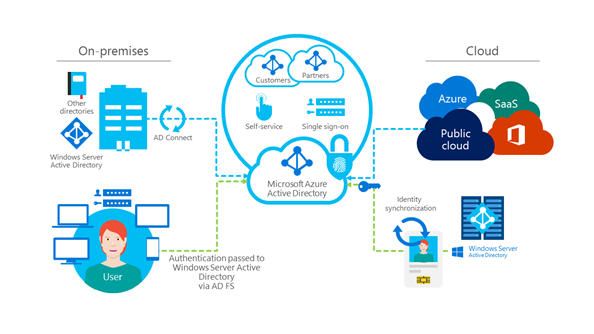
The need to guarantee the security of access to their resources under the dynamically changing environment of cloud computing has seriously increased in the business sector. To fulfill the identity and access management needs of an enterprise, the company offers a suite of Azure Active Directory microsoft azure cloud service. Paired with Azure Remote Desktop Services (RDS), this points to a sleeker, more secure method of remote access to applications and desktops with identity management features. Integration is built to reduce IT management and give the tools to increase productivity—all with increased security posture.
Benefits of Integrating Remote Desktop Services with Azure AD:
Security Enhanced: Azure AD provides a wide range of advanced security features, including Multi-Factor Authentication (MFA), Conditional Access, and Identity Protection, ready to integrate with Remote Desktop Services.
This therefore means that in as far as accessing the virtual desktops and applications are concerned; from any point across the globe and using any device they may have, therefore there are no other people who have been authorized apart from the customers themselves.
Better User Experience: SSO with Azure AD means users’ existing corporate credentials will provide access to remote desktops and corporate applications without prodding them to remember a number of passwords. This ensures a better user experience in that the users are productive enough and are satisfied with the systems in place.
Elastic and Flexibility:
Azure Remote Desktop Services provides organizations with an infrastructure that can scale up or down with demand. Together with Azure AD, this goes even further than identity or management scalability and easy onboards new users, allowing provisioning access and managing permissions.
Centralized Management:
Azure AD is a single place that allows central management from this very point for the organizational set-up with reference to user identity, groups, and access policies. This is improved when combined with Azure Remote Desktop Services to provide the IT administration an explicit view and control of the user accesses in such a way that it will require few management tasks.
Compliance and Governance:
The features of effective auditing and reporting in Azure AD make it possible for any organization to have the capability to meet industrial standards and regulation. Access to Remote Desktop Services integrated with Azure AD for an organization helps the organization apply control on access and monitoring of users and, at the same time, record all the audit trails to be able to easily show compliance.
Cost-Effective:
Azure Remote Desktop Services use a pay-as-you-go billing model, meaning an organization spends only on services actually used, which optimize the costs for the firm. Identity management through Azure AD offers another way to an organization aiming to save on cost by doing away with on-premises infrastructure and management overheads of implementing identity solutions.
Steps to Integrate Remote Desktop Services with Azure AD:
Set up Azure AD:
First, set up the Azure AD on the Azure portal. You can configure user accounts, groups, and organizational units within your organizational structure. You will be able to enable features like MFA, Conditional Access, and Self-Service Password Reset to enable offering an enhanced security environment along with improved users’ experience. Remotely Deploy Remote Desktop Services: Utilize the Azure portal or PowerShell to deploy Remote Desktop Services in Azure. Deploy virtual machines either for hosting session hosts or virtual desktops, depending on the customer needs from the requirements.
Ensure that adequate networking configurations are in place:
Virtual Network (VNet) settings and Network Security Groups (NSGs), so that Azure AD communication is well enabled toward Remote Desktop Services. Install and Configure Azure AD Connect: Azure AD Connect is a product from Microsoft by which one can configure the synchronization between on-premises Active Directory and Azure AD.
Set up an Azure AD Connect on a domain-joined server installed within your on-premises environment. Configure it to synchronize user accounts, groups, and attributes with Azure AD. This ensures the consistency of user identity within the on-premises and cloud environments that will further contribute to friction-free authentication and authorization.
Enable Hybrid Azure AD Join:
If your only intention is to enable frictionless access to Remote Desktop Services for on-premises users, configure Hybrid Azure AD Join for your domain-joined devices. This registers the device in both on-premises Active Directory and Azure AD, allowing Single Sign-On and Conditional Access policies to take effect for remote desktop sessions. Configuration of an Azure AD Application Proxy: The Azure AD Application Proxy provides a way for you to publish your web access servers and gateway servers very securely to the internet, never actually having to expose them.
Provide and configure the Azure AD Application Proxy connectors on servers within your network and publish the Remote Desktop Services URLs in the Azure portal to ensure that your remote users will then be able to securely access your desktops and applications from the Remote Desktop Services web portal. Conditional Access Policies: Set up the Conditional Access policies within Azure AD to make sure that the security requirements are adhered to for gaining access to the Remote Desktop Services. Policies can be defined on certain conditions that include but are not limited to the location of the user, device compliance, risk of the user, or risk of the machine for access to either the desktop or remote application.
Test and Monitor:
After this is set up correctly with their integration, a check on the remote access should be carried out in a monitored manner, ensuring that users authenticate seamlessly for resource access. Continuously monitor and collect logs from the Azure AD and Remote Desktop Services, which include any access anomaly, security incident, and authentication failure. Performance settings can be managed in a way that can be tuned for optimized performance and security.
Conclusion:
All in all, the integration of Remote Desktop Services with Azure AD offers the following benefits to organizations ready to improve identity management, security, and user experience within their remote access solutions. This will further simplify IT management, enhance productivity, and put the overall security position on even stronger ground as the enhanced capabilities of Azure AD are combined with the scaling flexibility of Azure Remote Desktop Services. It is for this reason that Microsoft saw it fit to recognize the company with its Business Applications Inner Circle Award, an attestation that Seal had been literally causing extensive functionalities in the contract lifecycle management space, enabling organizations to effectively cope and thrive within today’s digital settings.