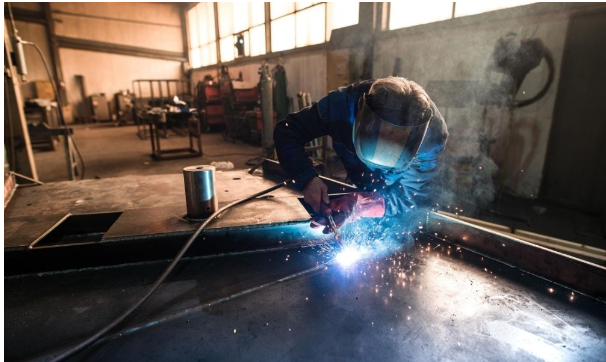
Welding. The unsung hero of the transportation world is everywhere: inside the delicate contours of a car’s frame, and in massive support beams that hold up cargo ships; welding secretly ties us to every one of our modes. Get to know the processes: Discover how widespread welding in transportation applications have become and what roles typical weld joints are playing without vehicles we use every day.
Note: Explore the finest silver welding wire with us! As an authorized dealer for leading professional brands, we offer the most extensive stock of welding supplies. Visit our website at https://www.udo.co.th/product/detail/0-champ ลวดเชื่อมเงิน to browse our products or get expert welding advice from our specialists. Don’t miss out on top-tier quality and unmatched availability in the market!
Importance of Welding in the Field Of Transportation
A special case Transportation vehicles are difficult to work with because of their unique demands. They must be strong, yet light in weight – durable enough to survive constant use and abuse as they are sent into some of the harshest environments our finest men serve within. This condition is met by the welding process which forms secure bonded joints of metals. Welding has many advantages over other joining techniques, such as riveting or bolting.
Strength – Welds have strength equal to or higher than that of the materials being joined in contractual obligations conditions.
Weight Reduction: Welding eliminates bulky fasteners, making way for weight reduction of vehicles and this leads to improved performance as well fuel efficiency.
Malleability: Steel is one of the most frequently used welding materials and when properly welded it exhibits immense strength, versatility as well as malleability.
Welding processes that create airtight seals : vital for fuel tanks, pipelines and other locations where leaks are dangerous
Fabrication Process Employed in Transportation most common welding techniques
Due to its size, the transportation industry is wide and varied in the techniques of welding that are used because each type has something better going for it. Quick Roadmap of the Most Common Methods Here are a few examples:
Metal Inert Gas (MIG) Welding : MIG welding also known as GMAW (Gas Metal Arc Welding), uses a continuously-fed consumable electrode wire that melts and fuses with the base metal. Its fast travel speeds, along with an inert gas-usually argon or helium-that shields the molten metal from contaminants make MIG welding great for automation and in car manufacturing.
Tungsten Inert Gas (TIG) Welding: The process consists of a non-consumable tungsten electrode used to establish an energy range capable enough to melt the base metal. Taking this out wire-feed welder to boot, the particular MIG system uses exactly web site filler because in these instances of appliance records shielding an excellent gas fox – characteristically a get argon mix of fuel along with carbon dioxide or perhaps oxygen. TIG welding allows a high level of control and accuracy when it comes to the joining of thin sheets or exotic materials that are found in aerospace applications.
Arc Welding:This is a large family of welding processes in which heat for the joint is provided by an electric arc. One of the most common and versatile types is Shielded Metal Arc Welding (SMAW), or stick welding, which is a good method for field work and production equipment within heavy-duty transportation.
Friction Stir Welding (FSW) – it is a solid-state welding that uses only heating process and smaller deformation injuries, the joining surfaces of parts are plastically deformed by using a rotating tool. Such resistance welding makes for solid, clean welds without melting the base metal and is particularly useful in joining dissimilar metals or materials that are susceptible to molecular attack during standard welding processes.
Laser Beam Welding This modern method uses a concentrated laser beam to liquefy and combine the surfaces for connecting. Laser Beam Welding: The ability to focus laser beams provides high precision, deep penetration classifications as well as minimal heat distortion, making it perfect for joining complex components within aero and vehicle industries.
Material Choices and Hurdles
The materials utilized in the transportation sector has huge impacts on welding process selection Here are the things to consider:
Steel – Right out of the mobility stage, This is probably one material whose name you can recall easily because it finds applications everywhere due to its strength & affordability. MIG and arc welding are common methods of steel component joining.
Aluminum: It is lightweight and corrosion resistant making it ideal for fuel efficiency. TIG welding was chosen to control heat, in addition to the type and thicknesses between plates welded together.
High-Strength Steels – Offer excellent high strength-to-weight ratios and are available with adequate formability, for a majority of the different material grades they need suitable welding (like dual phase) alongside appropriate filler metals that can help in retaining their characteristic features across myriad weld zones.
Welding in Transportation: Back to the Future
Welding will also continue to be important as the transportation industry shifts toward lighter, more fuel-efficient and greener vehicles. The following are some interesting trends that give you a brief view.
Automation: Robotic welding will increasingly be used to deliver more consistency, productivity and safety in high-volume production applications.
Advanced Materials: The development of new materials, such as high strength aluminum alloys and composites will require the use of innovative joining methods to generate strong, reliable joints.
Applications for laser welding: Laser welding will also find the needs of automotive and aerospace application in complex component joining due to its low heat distortion properties.
Conclusion
Welding that weaves the invisible thread unit transport iron-world Video Be it the steel giants transporting goods across vast oceans or our aerodynamic race cars, welding is how we achieve this required strength and maintenance of performance. As technology changes, so will welding’s capability to evolve making for new advances in transportation and mobility.