Table of Contents
Semiconductors are silently driving the innovations that define our everyday lives. From smartphones to spacecraft, these materials are crucial for many electronic devices.
They are small blocks that help to build your everyday electronic gadgets, from smartphones to computers, tablets, and other gadgets. They process information and store data. They are revolutionary components for how we communicate, work, and amuse ourselves.
Semiconductors play a pivotal role in powering modern electronics, from smartphones to home automation systems. Their efficiency and scalability have revolutionized how we interact with technology daily. Ensuring these systems are properly integrated and maintained is crucial for optimal performance. For expert electrical services and solutions tailored to advanced systems, explore the Sarkinen Electrical homepage for reliable and professional assistance.
Let’s explore what semiconductors are and eight essential roles that they play in modern electronics.
What Are Semiconductors?
Semiconductors are materials with electric conductivity between an insulator (like rubber or glass) and a conductor (let’s say copper). To alter a material’s conductivity, you must submit its crystal structure to impurities and defects.
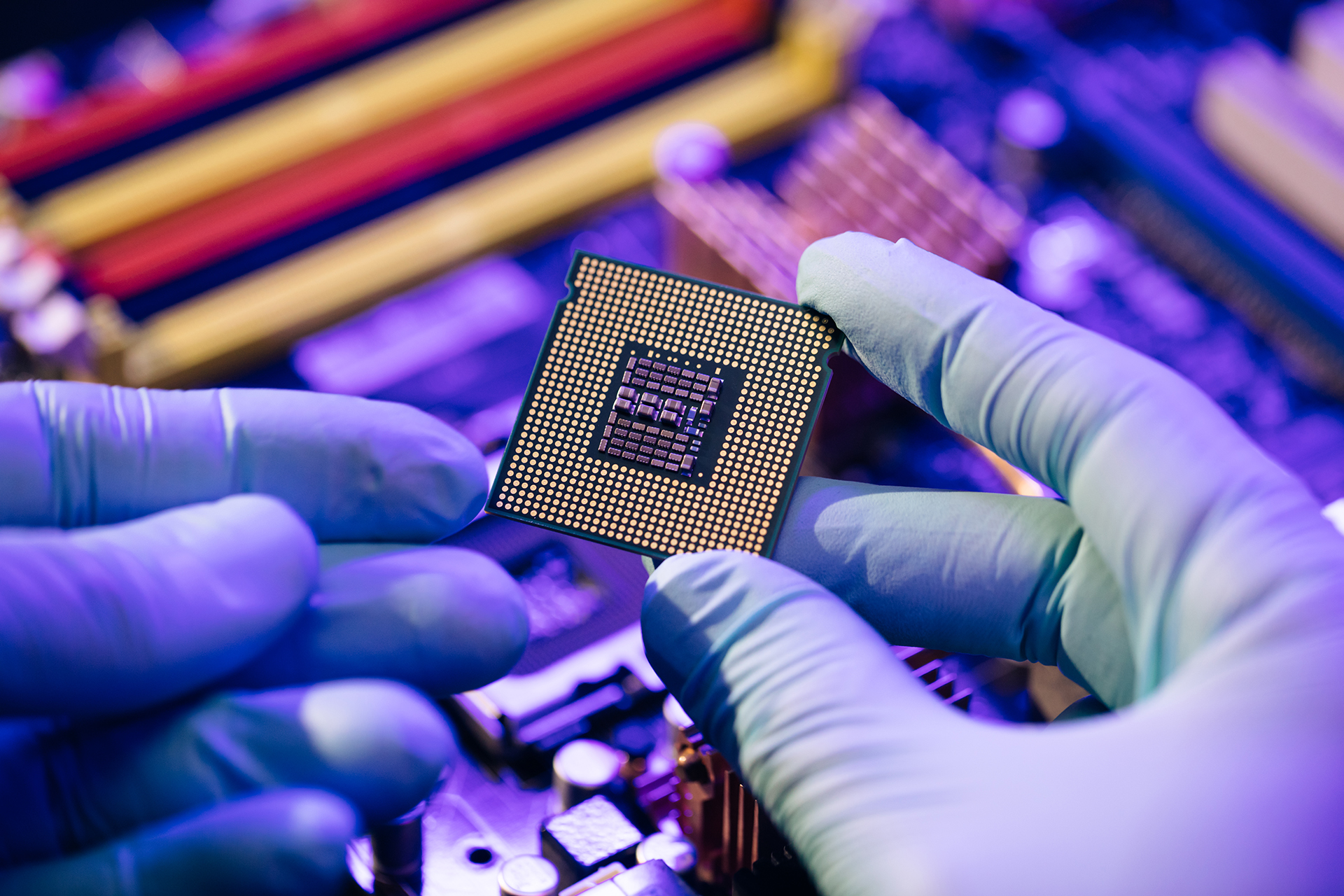
The most popular semiconductor material is silicon. You will find it most often in integrated circuits (microchips). They have transistors that act as switches. They allow electricity to pass through, allowing for complex electronic processes.
Other semiconductor materials with unique properties that make them suitable for certain applications are gallium arsenide, germanium, and indium phosphide.
There are two types of semiconductors: N-type (there are many free electrons, or the conductance is higher) and P-type (lower inductance and fewer free inductors).
Semiconductor Technology Examples
Semiconductors can have various applications, including the following:
- Transistors are essential to digital electronics; they act as switches or amplifiers.
- Diodes are used in lighting apps and power supplies; they allow current to pass in one direction.
- Microprocessors—These integrated circuits have memory, CPU, and other circuits; they act as the brains of many devices (computers, home appliances, smartphones, etc.).
- LED lights emit light when a current is applied to them.
- Solar cells turn sunlight into electricity.
Essential Roles of Semiconductors in Modern Electronics
1. Powering Microprocessors
Microprocessors are the brain of every smartphone, computer, or gaming console, among other things. They perform calculations and tasks that effectively make the device run as intended. Semiconductors are essential materials for building these microchips because using them drives advancements in computing speed and power.
2. Facilitating Power Electronics
Semiconductors are used in the development of power electronics. They manage and convert electrical power effectively.
Diodes, rectifiers, and transistors are used for inverters, motor drives, and power supplies. These types of components are crucial for energy conservation. They guarantee minimal power loss and high efficiency when converting and controlling electrical energy.
3. Developing Medical Devices
The healthcare sector utilizes semiconductors to create various pieces of equipment. Monitoring, imaging, therapeutic, and diagnostic equipment use semiconductors. When you go into an MRI machine or a CT scanner, know that they have semiconductors in them, and they are the reason those machines work in the first place.
Wearable health monitors also use them to function accurately. Overall, healthcare electronic devices use semiconductors to provide high-resolution imaging, real-time monitoring, and precise data processing. Thus, they significantly improve healthcare outcomes and quality for patients and doctors alike.
4. Using Integrated Circuits
Integrated circuits or chips are small circuit systems with clear and important roles in the electronic ecosystem. They are made up of semiconductor devices and passive components. They can be found in various applications and have revolutionized the way most modern electronics work.
5. Improving Telecommunication
The telecommunications industry has evolved enormously in the last 100 years. Now, it relies very much on technology. And that means it uses semiconductors to construct devices like mobile phones, satellites, fiber-optic communication systems, and more. With semiconductors, you can build cell phones, satellite systems, and other communication devices, including wireless comm systems and network equipment.
High-frequency and high-speed communication devices use semiconductors. They enable you to transmit and receive data quickly and easily. That is how we can now enjoy global exchanges of information, read up on how our friends are doing, and watch news or cat videos, for example.
6. Developing Consumer Electronics
Every modern appliance and electronic device in your house uses semiconductors, including your TV, microwave, gaming console, and smartwatch. As previously mentioned, these semiconducting materials provide the functionality needed for connectivity, processing, and memory storage.
These materials helped reduce the weight and size of various components while improving performance. In turn, that leads to more and more sleek, efficient, and powerful consumer gadgets.
7. Encouraging Renewable Energy Solutions
Renewable energy technologies use semiconductors to function efficiently. The most evident examples are solar panels and wind turbines. Solar panels use silicon to turn sunlight into electricity, for instance.
Power electronics are useful for the management and optimization of energy harvested from renewable sources. The technology supports sustainable energy solutions, aiming for a better future with more eco-friendly electronics.
8. Advancing Automotive Tech
Most modern vehicles now have various electronic systems for control. That includes engine control, infotainment, navigation, and safety options.
Semiconductors are present in all of these systems. They enable advanced features like autonomous driving, vehicle-to-everything communication, and real-time traffic updates on the screen. Semiconductor devices are reliable and efficient, and they contribute to safer and smarter driving experience.
Career Opportunities
Considering the variety of industries using semiconductors to develop modern technologies, there are numerous career opportunities available on the market. Let’s list some possible career paths:
- Product engineers – they can work in product testing, quality control, and failure analysis. Their job is to ensure that semiconductor products meet their requirements.
- Process engineers – they develop and optimize the manufacturing process. They can also work on process and quality control.
- Semiconductor engineers – they design and develop new technologies, devices, systems, and circuits. They can also work on simulation, testing, or optimization of existing devices.
- Application engineers – they design and implement solutions. They can also work in technical support, training, and product demonstrations.
- Research scientists – they develop new materials and devices. They can do their activity in academia, government research, or the private sector.
Conclusion
The semiconductor market is likely to maintain its growth rate. Autonomous vehicles, 5G technology, and renewable energy systems will continue to require more powerful solutions, such as semiconductors.
Companies are constantly searching for new materials and techniques to develop better and more advanced technologies. If you have a STEM background, you have the best chance of pursuing this career.